Yu Xiang Rou Si: The Dish That Made Me Question Everything
Gray, gluey pork swimming in cloyingly sweet sauce? Doubanjiang tasting raw and harsh? Vegetables either raw or overcooked? After ruining this Sichuan classic six times, I finally learned the secrets: velvet the pork with cornstarch, pre-mix the Yu Xiang sauce, and bloom doubanjiang on low heat until red oil releases.

The first time I tried making Yu Xiang Rou Si, I was confident. It’s just shredded pork with vegetables, right? How hard could it be?
The answer: very hard.
What came out of my wok was a gray, gluey puddle of pork strips swimming in a cloying, overly sweet sauce. The doubanjiang tasted raw and harsh. The vegetables were either raw or overcooked—no in-between. Worst of all, the sauce turned into a paste within minutes of hitting the plate.
I made it again. And again. And again. Six times over the next few weeks. Each batch got a little better. By the end, I had a rhythm that worked every time.
Here’s what I finally figured out—and what went wrong along the way.
What You Need
For the pork and marinade:
- Pork tenderloin or lean pork shoulder – 250g
- Light soy sauce – 1 tablespoon
- Shaoxing wine – 1 tablespoon
- Cornstarch – 1 teaspoon
- White pepper – ¼ teaspoon
- Neutral oil – 1 teaspoon
For the vegetables and aromatics:
- Dried wood ear mushrooms – 20g (soaks to about 50g)
- Carrot – 1 small, shredded
- Green bell pepper – 1, shredded
- Ginger – 10g, minced
- Garlic – 4 to 5 cloves, minced
- Scallions – 2 stalks, cut into 2cm sections
- Doubanjiang – 1 tablespoon
- Pickled red chili (optional) – 1 tablespoon, finely chopped
For the Yu Xiang sauce:
- Light soy sauce – 1½ tablespoons
- Chinkiang vinegar – 1½ tablespoons
- Sugar – 1½ tablespoons
- Salt – ¼ teaspoon
- Cornstarch – 1 teaspoon
- Water – 3 tablespoons
For cooking:
- Neutral oil – 3 to 4 tablespoons
Start With the Pork
The first thing I learned: you can’t just slice pork and throw it in the wok. It needs a little help.
Cut the pork into thin strips — about half a centimeter thick. If the meat is slightly chilled, it’s easier to slice evenly.
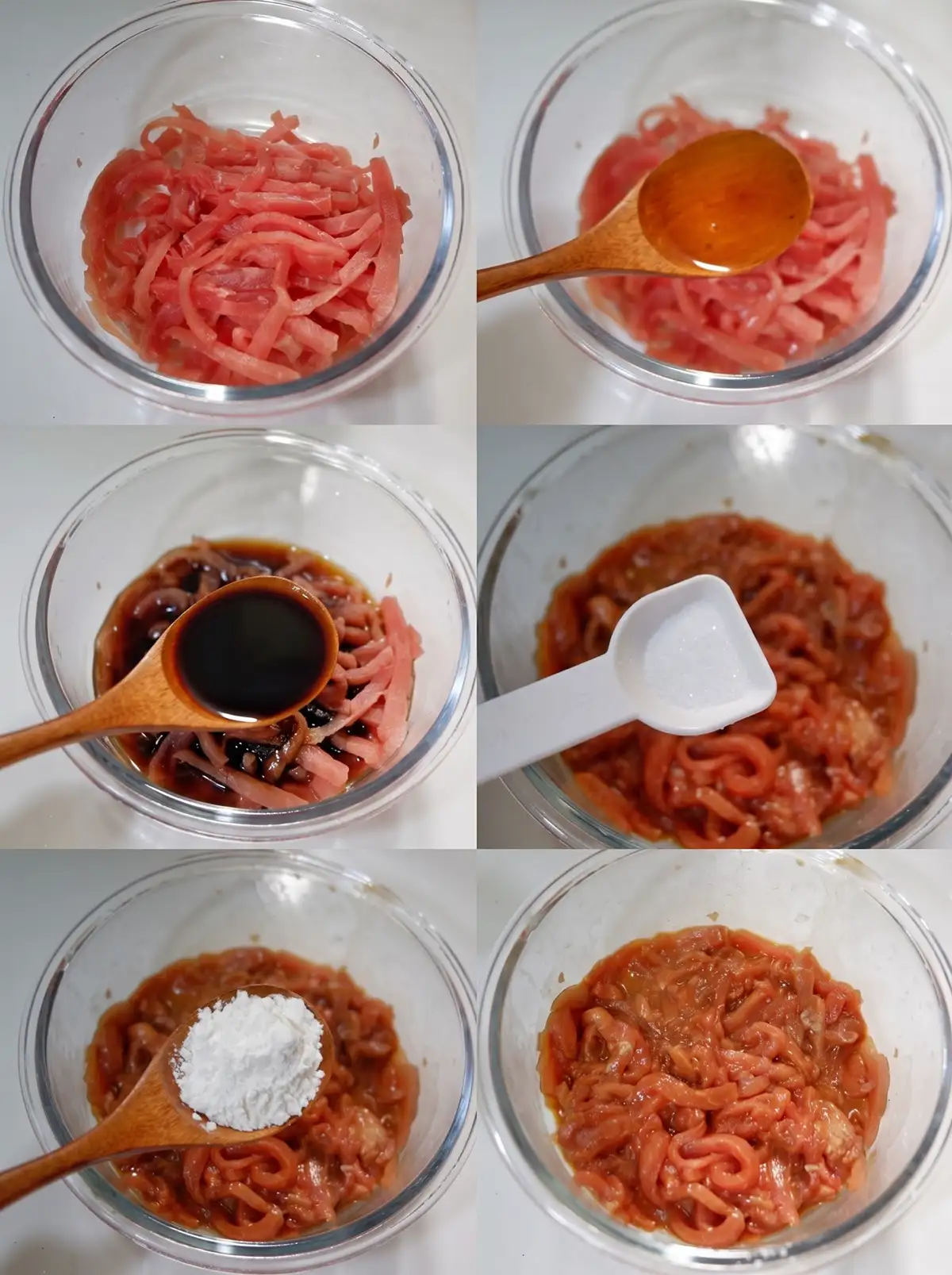
Marinate it. Mix the pork with the soy sauce, Shaoxing wine, cornstarch, white pepper, and oil. Let it sit for at least 15 minutes.
Why bother? The cornstarch creates a thin protective layer around each strip. When it hits the hot oil, that layer gelatinizes and locks in moisture. Without this step — called “velveting” — the pork releases its juices during cooking and turns dry and tough. I skipped this on my first attempt and ended up with gray, chewy pork that tasted like cardboard.
Do not skip the oil in the marinade. It keeps the pork strips from sticking to each other when they hit the wok.
While the Pork Marinates, Prep Everything Else
Yu Xiang Rou Si cooks in about 8 minutes flat. There’s no time to measure or chop once the wok is hot.
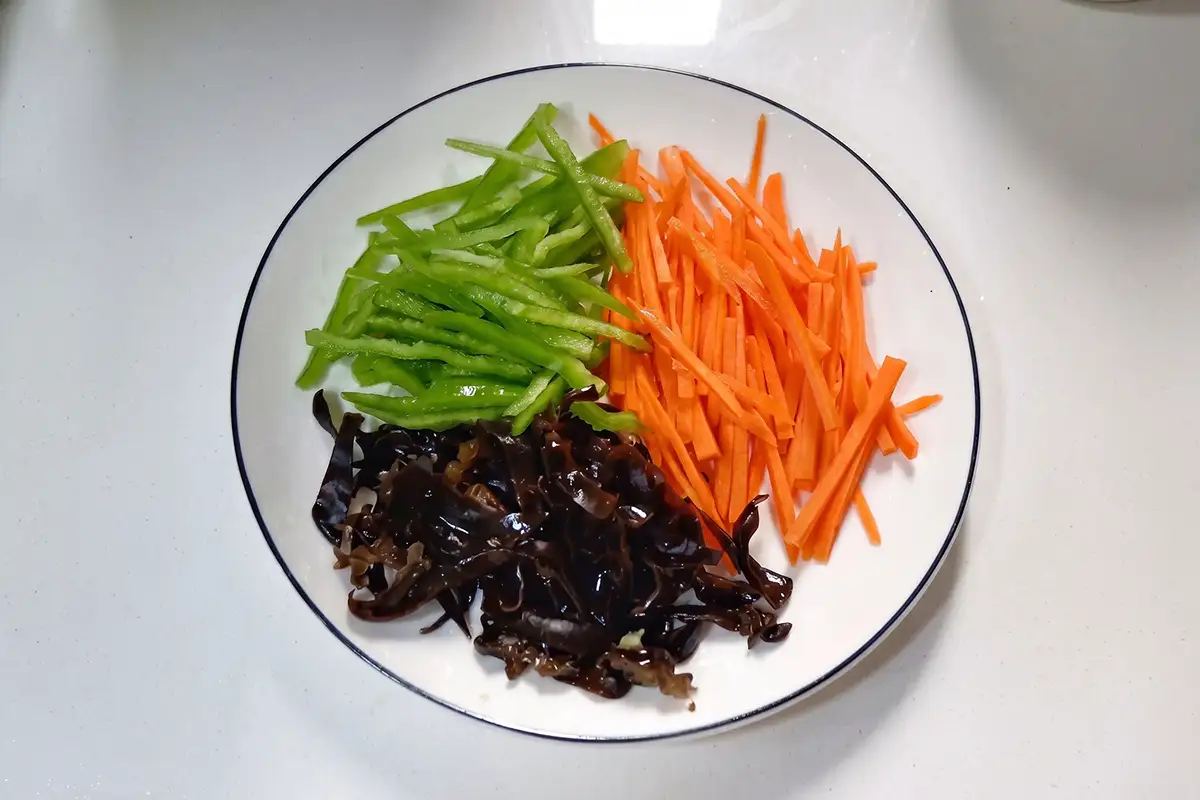
Soak the wood ear mushrooms in warm water for 20 minutes. Drain, remove any hard stems, and shred them. Unsoaked wood ear is hard and chewy — not pleasant.
Shred the carrot and bell pepper. Keep them roughly the same size as the pork strips. Uniform shapes = even cooking.
Mince the ginger and garlic. Cut the scallions into sections.
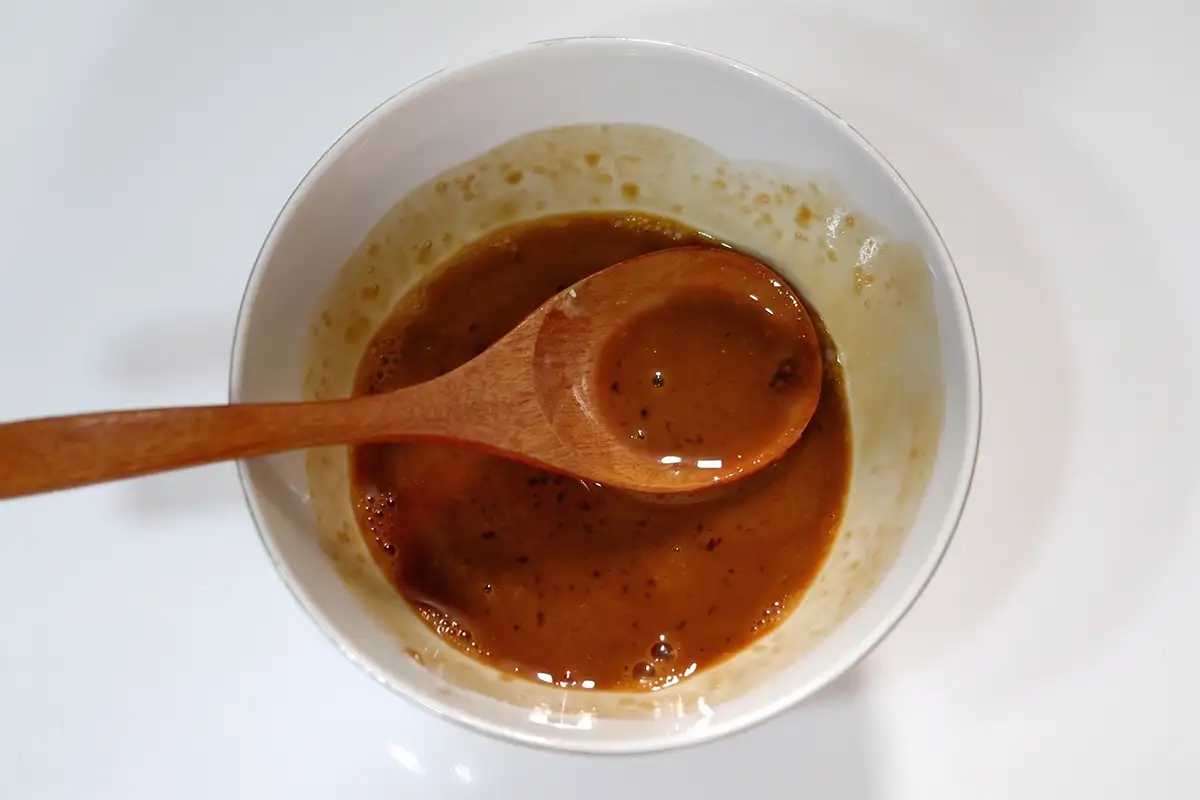
Pre-mix the Yu Xiang sauce. In a small bowl, combine the soy sauce, Chinkiang vinegar, sugar, salt, cornstarch, and water. Stir until the sugar and cornstarch dissolve completely.
I used to add these ingredients one by one while the wok was hot. The sugar didn’t dissolve properly. The cornstarch clumped. The result was a lumpy, gluey mess. Pre-mixing fixes all of that.
Step 1: Fry the pork
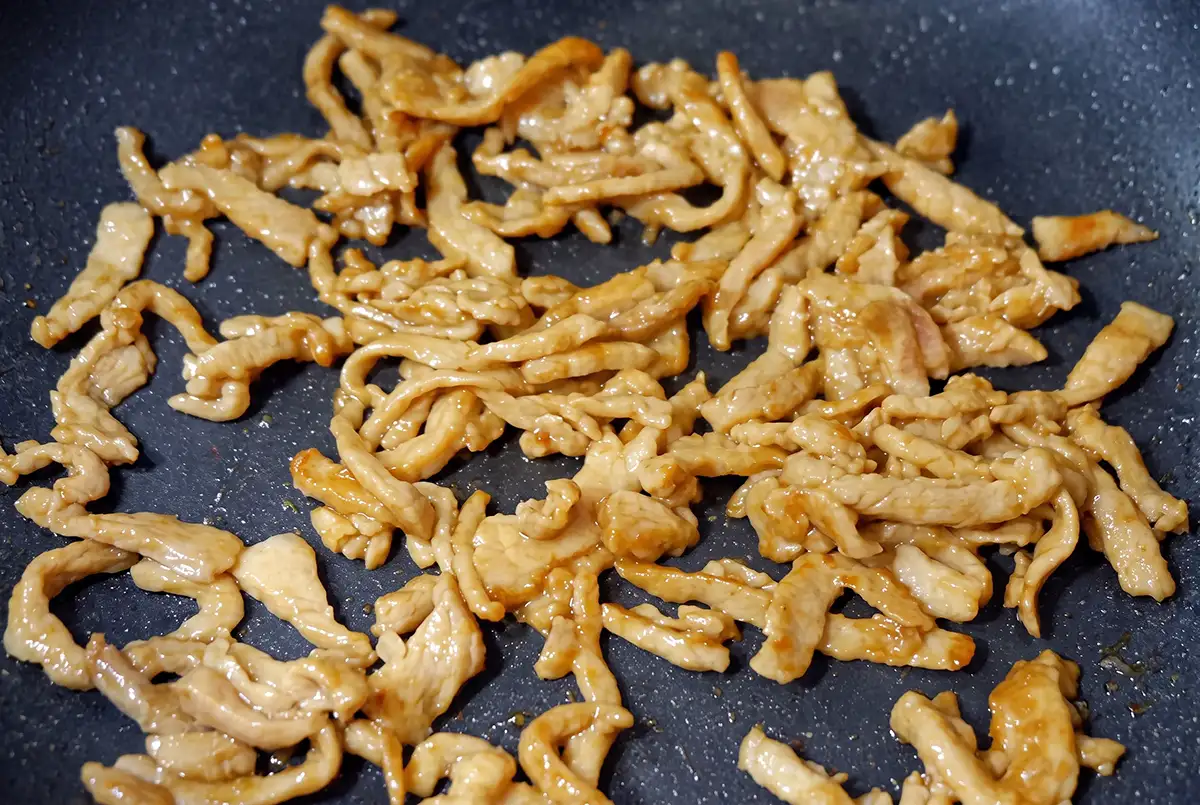
Heat your wok over high heat. Add 2 tablespoons of oil. When it’s shimmering, add the marinated pork.
Spread the pork out in a single layer. Let it sit for about 30 seconds before you start stirring. This gives it a chance to develop a light golden color.
Stir-fry for 1 to 2 minutes, just until the pork is cooked through and slightly golden at the edges. Remove it from the wok immediately and set it aside.
I used to leave the pork in the wok while I added everything else. By the time the dish was finished, the pork was overcooked and dry. Remove it early. It’ll go back in at the end.
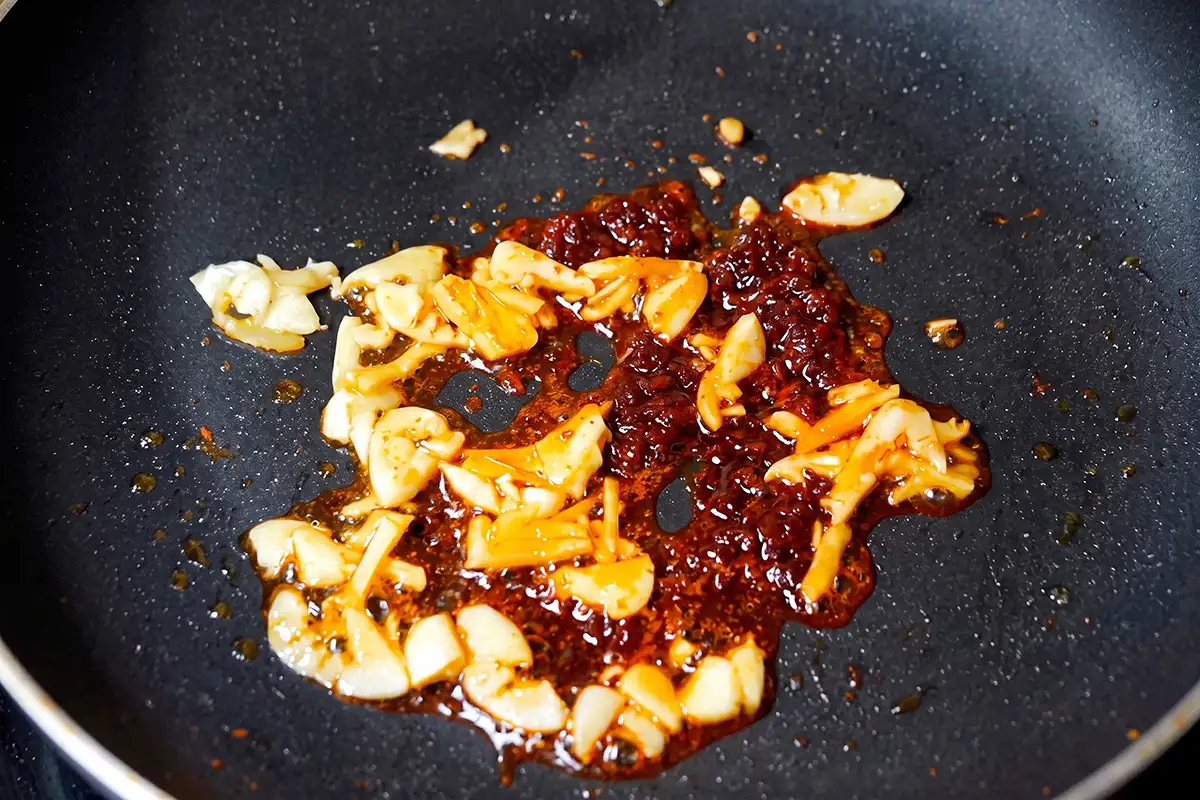
Step 2: Bloom the doubanjiang
This is the step I messed up more than any other.
Reduce the heat to low. Add 1 tablespoon of oil to the wok. Add the doubanjiang and the pickled red chili (if using).
Fry on low heat for about 30 seconds, pressing and stirring. Watch the oil turn reddish and the paste become fragrant.
I used to add doubanjiang on high heat and fry it with the pork. The paste never bloomed. It tasted raw and harsh. Low heat and oil are what release the red oil and deep flavor. If you smell burning or see black specks, you’ve gone too far—start over.
Step 3: Add aromatics and vegetables
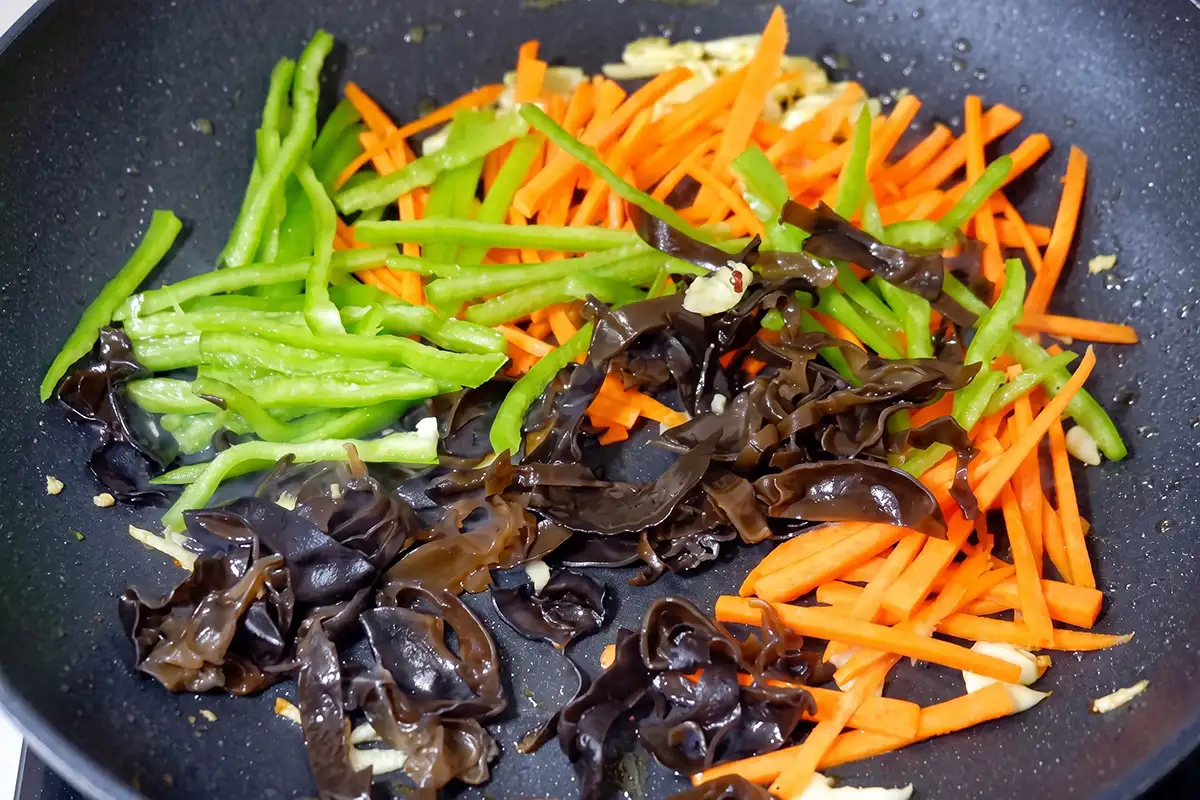
Add the minced ginger and garlic. Stir for about 15 seconds until they smell fragrant.
Increase the heat to medium-high. Add the shredded carrot, wood ear mushrooms, and bell pepper. Stir-fry for 1 to 2 minutes until the vegetables are tender-crisp — cooked but still bright and with a bite.
Overcooked vegetables become soft and lose their color. I’ve made that mistake too.
Step 4: Bring it all together
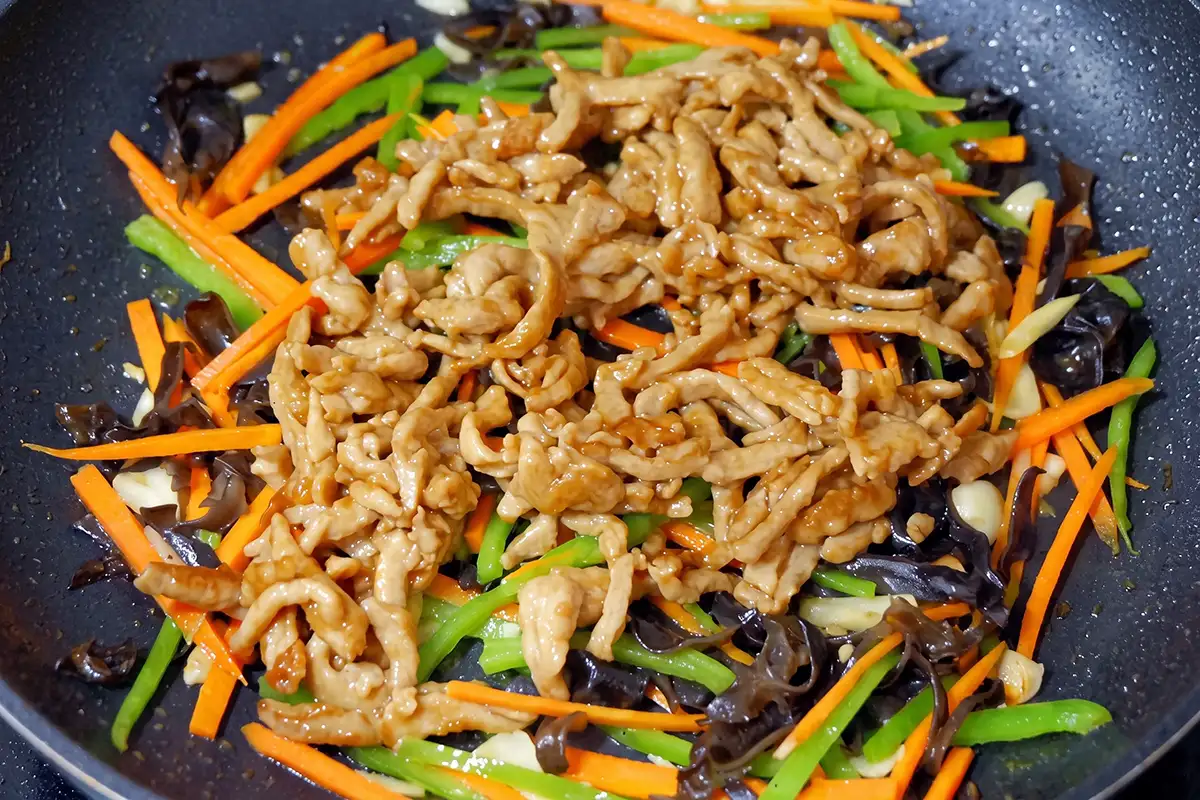
Return the cooked pork to the wok.
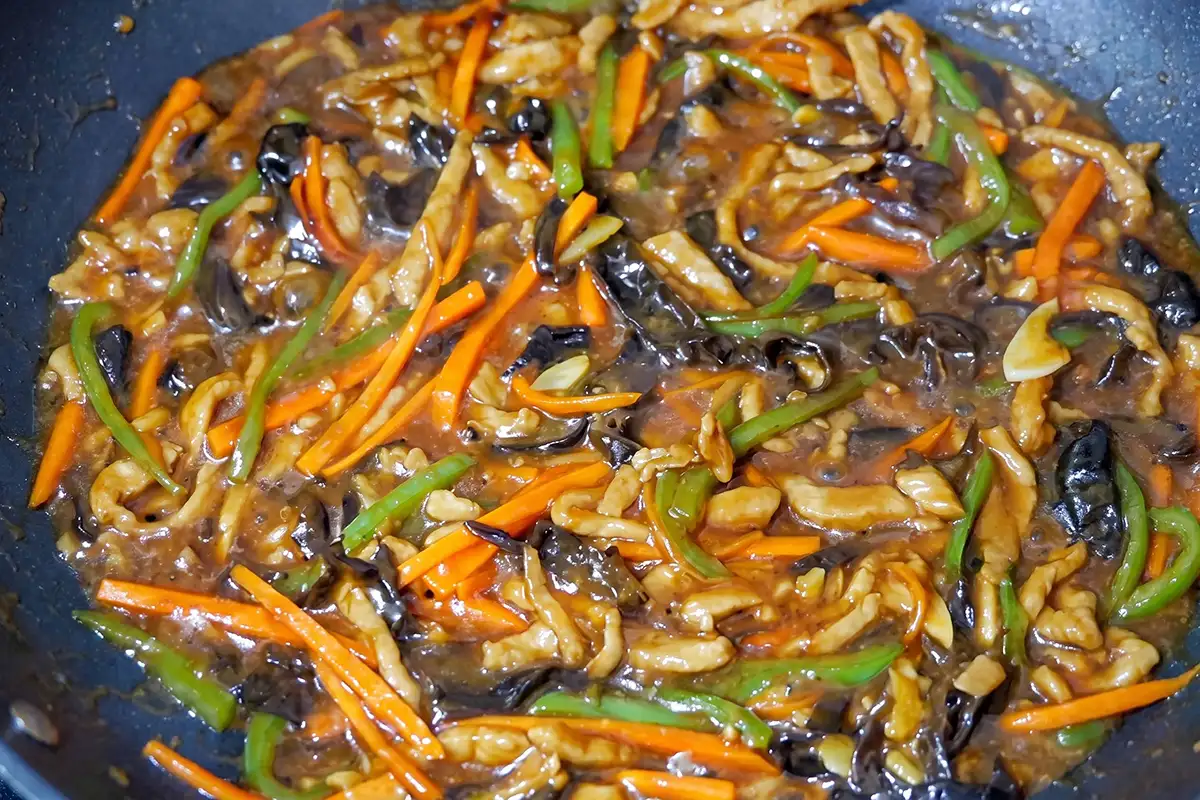
Pour the pre-mixed Yu Xiang sauce around the edge of the wok, not into the center. The edge is the hottest part. The sauce hits the hot metal, caramelizes slightly, and releases a richer aroma.
Toss everything together on high heat for about 30 seconds. The sauce should thicken and coat every piece of pork and vegetable.
Add the scallion sections, give one final toss, and serve immediately over steamed rice.
What I Got Wrong and How I Fixed It
The sauce was gluey and overly sweet. I added ingredients one by one and used too much sugar. The fix: pre-mix the sauce with 1.5 tablespoons each of soy sauce, vinegar, and sugar.
The doubanjiang tasted raw and harsh. I fried it on high heat with the pork. The fix: fry it separately on low heat for 30 seconds until the oil turns red.
The pork was dry and tough. I skipped the marinade and overcooked it. The fix: marinate with cornstarch and oil for 15 minutes. Cook for 1 to 2 minutes, then remove.
The sauce had cornstarch lumps. I added the cornstarch during cooking. The fix: pre-mix all sauce ingredients until smooth.
If You Need to Swap Things
| Instead of | Use | Notes |
|---|---|---|
| Pork tenderloin | Chicken breast or thigh (250g) | Reduce stir-fry time by 20 seconds |
| Wood ear mushrooms | Fresh shiitake (sliced) | Softer texture, cook for 1 minute |
| Chinkiang vinegar | 1 tbsp rice vinegar + ½ tsp balsamic | Different flavor, but works |
| Doubanjiang | Gochujang (1 tbsp) | Not authentic, reduce sugar slightly |
| Pickled red chili | ½ tsp red pepper flakes + 1 tsp rice vinegar | Adds heat and tang |
Vegetarian version: Use 250g firm tofu (pressed, cut into strips). Don’t velvet it. Cook until golden, then proceed with the recipe.
Lower sugar version: Reduce sugar to 1 tablespoon, increase vinegar to 2 tablespoons. More savory, less sweet.
Extra spicy version: Add 1 to 2 fresh red chilies with the ginger and garlic. Add ½ teaspoon ground Sichuan peppercorn at the end.
The Two Ingredients You Shouldn’t Skip
Chinkiang vinegar is the sour backbone of this dish. It’s dark, mellow, and slightly malty. White vinegar is too sharp, balsamic is too heavy. If you don’t have it, mix rice vinegar with a tiny splash of balsamic. It won’t be the same, but it’ll be close.
Doubanjiang gives the spicy, savory depth. Fry it on low heat until red oil appears. If you skip this step, the dish is just sweet and sour pork with vegetables.
How I Serve It
Yu Xiang Rou Si belongs over steamed jasmine rice. The sauce is too good to waste—it soaks into the rice and makes the whole meal.
I serve it with:
- Steamed rice—essential
- A simple cucumber salad—cools the palate
- A clear soup—optional
I don’t serve it with another spicy or rich dish. One is enough.
Leftovers?
Store in a sealed container in the fridge for up to 2 days. The vegetables lose crispness, but the flavor holds up.
Reheat on the stovetop with a splash of water to loosen the sauce. Microwave works too, but the texture will be softer.
Don’t freeze it. The vegetables turn to mush and the sauce separates.
Quick Answers
Why is my sauce gluey and paste-like? Too much cornstarch, or you didn’t pre-mix. Use 1 teaspoon and dissolve it fully.
Why is my dish too sweet? Too much sugar. Start with 1.5 tablespoons and adjust from there.
Why does my doubanjiang taste raw? You didn’t fry it long enough or you used high heat. Fry on low for 30 seconds until red oil releases.
Why is my pork dry and tough? You skipped the marinade or overcooked it. Marinate for 15 minutes, cook for 1 to 2 minutes, remove.
Can I use regular vinegar instead of Chinkiang? You can, but the flavor will be sharper. Chinkiang is the authentic choice.
Why pour the sauce around the edge of the wok? The hot edge caramelizes the sauce slightly, adding richer aroma.
Is this dish supposed to taste like fish? No. The name refers to a seasoning blend originally used for fish. No fish is involved.
Three Versions I Actually Make
Classic: 1 tablespoon doubanjiang, 1 tablespoon pickled chili, 1.5 tablespoons sugar. My default.
Lower sugar: 1 tablespoon sugar, 2 tablespoons vinegar. More savory, less sweet.
Extra spicy: 1.5 tablespoons doubanjiang, 2 tablespoons pickled chili, plus fresh chilies. For when I need heat.
Final Thoughts
Yu Xiang Rou Si taught me that the details matter. Marinate the pork. Pre-mix the sauce. Fry the doubanjiang on low heat. Pour the sauce around the edge. Cook the vegetables just until tender-crisp.
I made gluey sauce. I made raw, harsh doubanjiang. I made dry, tough pork. All of those failures taught me the rhythm I just wrote down.
Make it once. Adjust it to your taste. And even if your first batch isn’t perfect, it’ll still be better than anything from a takeout box—because you made it yourself.
Related posts: