Mapo Tofu: The Sichuan Dish That Made Me Slow Down
Tofu crumbled into a grainy mess? Doubanjiang turned bitter with black speckles? Sauce watery and pooling instead of coating the tofu? After ruining this Chengdu classic three different ways, I finally learned the secrets: toss soft tofu gently instead of stirring, fry doubanjiang on medium heat until the oil turns reddish-brown, and thicken the sauce in two steps.

I still remember that first bowl of Mapo Tofu I had in Chengdu. The silky-smooth tofu, the crispy beef cubes, and that sauce—spicy at first, then numbing, followed by a slow and lingering, slightly intoxicating sensation. I had never tasted anything quite like it.
When I tried making this dish at home, the results were a far cry from the original. The tofu crumbled into a grainy mess. The sauce tasted bitter and was speckled with tiny black dots. Or it was watery, pooling at the bottom of the bowl instead of coating the tofu.
It turns out that the key to successful Mapo Tofu lies in patiently preparing the sauce, handling the tofu gently, and using a two-step technique to thicken the sauce.
Here is the correct method I finally mastered after spending far too much time figuring it out.
Ingredients
- Silken tofu or soft tofu – 500 grams (never use firm tofu)
- Ground beef – 150 grams (ground pork is also acceptable)
- Ginger – 15 grams, minced
- Garlic – 15 grams, minced
- Green onions – 15 grams, cut into segments
- Dried chili peppers – 5 grams, cut into small pieces
- Pixian doubanjiang (bean paste) – 2 tablespoons
- Light soy sauce – 1 tablespoon
- Shaoxing wine – 1 tablespoon
- Salt – a pinch for blanching, plus additional to taste
- Ground Sichuan pepper – 2 grams total, used in batches
- Cornstarch slurry – 10 grams cornstarch mixed with 35 milliliters cold water
- Cooking oil – 3 to 4 tablespoons
- Unsalted chicken broth or water – 300 milliliters
Starting with the Tofu
This is where I messed up the first time I made this dish. I treated the tofu like a regular ingredient for stir-frying—stir-frying it vigorously and tossing it constantly. By the time I was done, the tofu had crumbled into tiny pieces. It looked more like scrambled eggs than Mapo Tofu.
Soft tofu is very delicate. It needs to be handled gently.
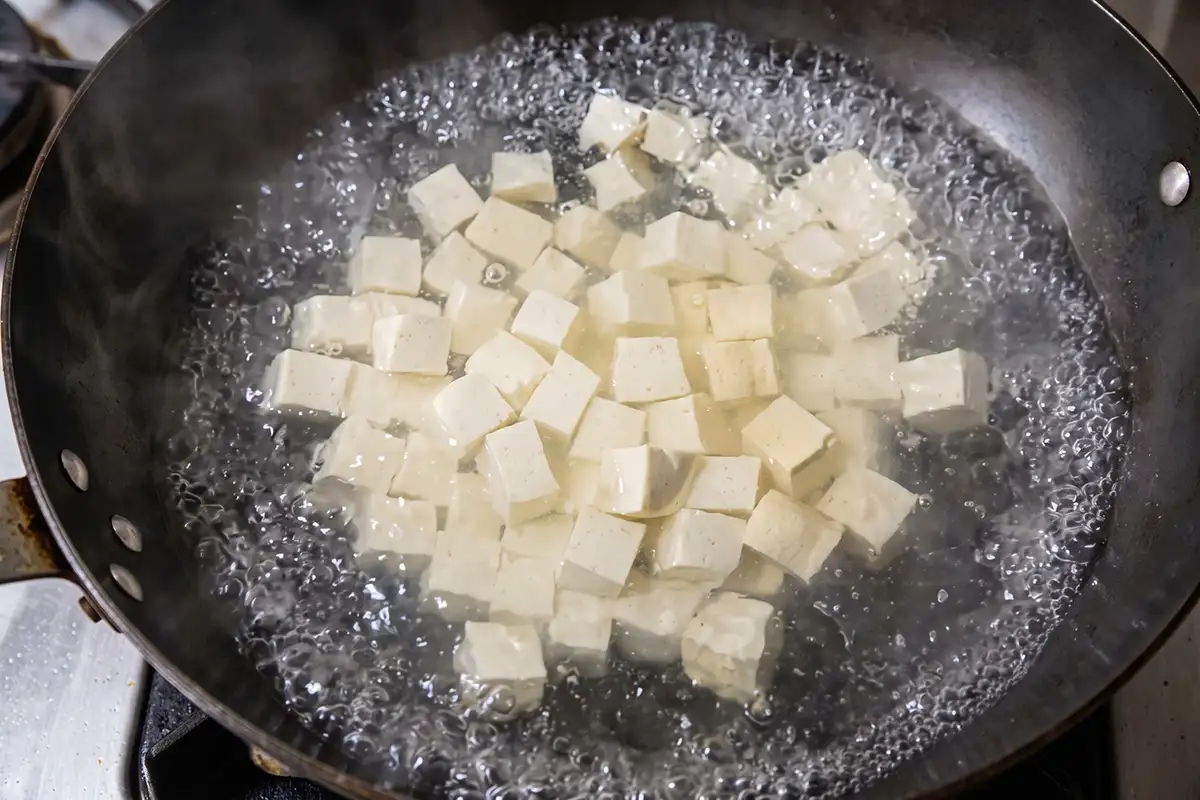
Cut the tofu into 2-centimeter squares. Bring a pot of water to a boil and add a pinch of salt. Gently slide the tofu into the pot and blanch over low heat for 1 to 2 minutes. Then drain carefully.
Why blanch it? There are two reasons. First, to remove the raw soybean flavor, and second, to help the tofu hold its shape during cooking.
From this point on, use the spatula to “toss” the tofu—not to stir it. Push the tofu from the edges of the wok toward the center, gently shifting it around. If necessary, you can give the wok a gentle shake. But under no circumstances should you stir it like you would when making fried rice.
Meat: Fry Until Crispy, Not Steamed
Mix the ground beef with half the Shaoxing wine and about 1 teaspoon of soy sauce. Let it marinate for 5 to 10 minutes while you prepare the other ingredients.
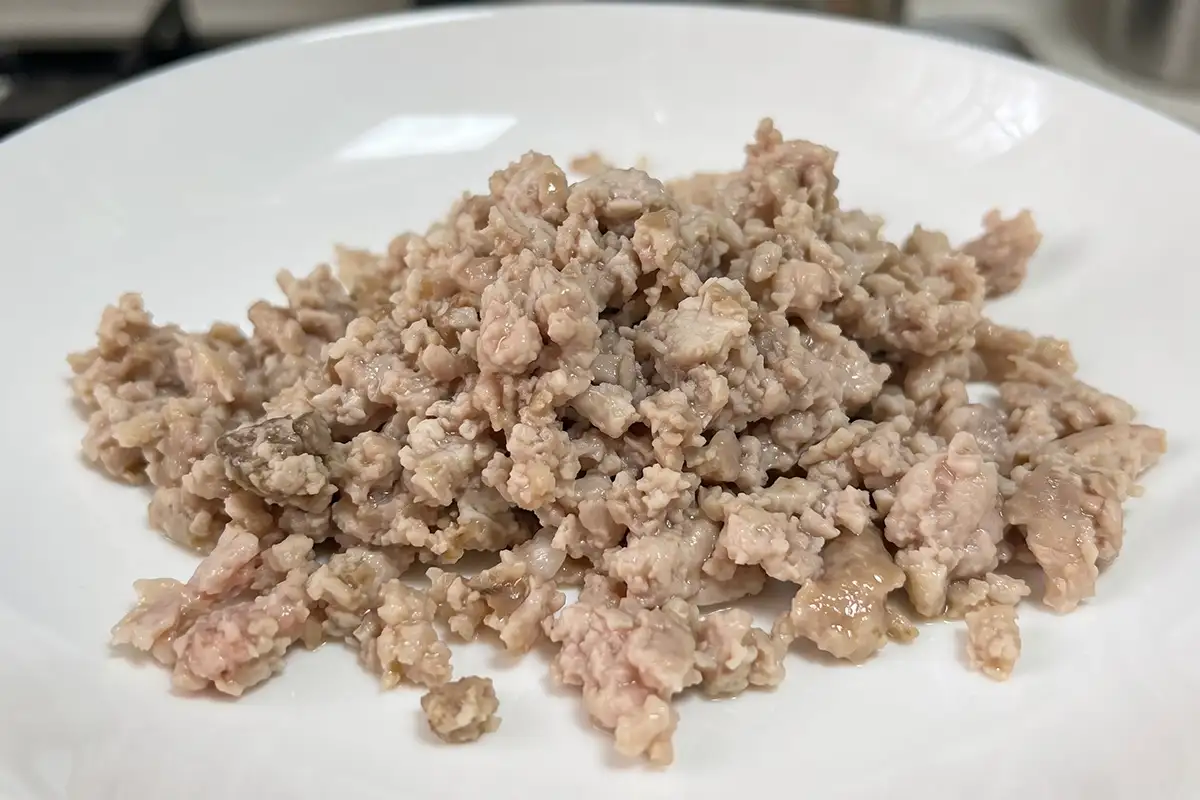
Place the wok over medium-high heat and add oil to heat it up. Add the ground beef and stir-fry until the meat is no longer pink and the edges begin to crisp and brown. This takes about 2 to 3 minutes.
Scoop the beef out and set it aside, leaving a small amount of oil in the wok.
Why remove it? You’ll be sautéing the aromatics and stir-frying the sauce next, and leaving the beef in the way would get in the way. You’ll add it back later.
Sauce: Patience Pays Off Here
This is the crucial step that determines success or failure. I burned the doubanjiang more than once before I finally got the hang of it.
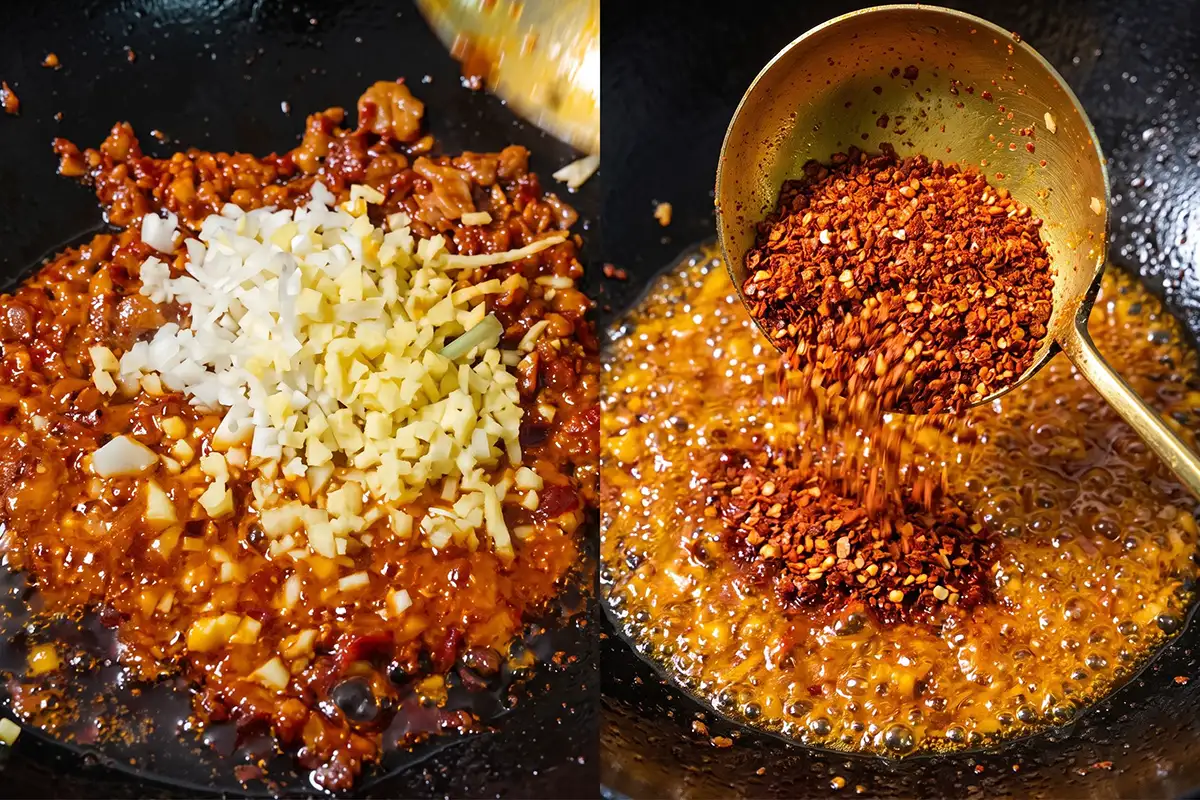
Reduce the heat slightly. Add the dried chili peppers and stir-fry until they release their aroma—about 20 seconds. Do not let them turn black, or they’ll become bitter.
Add the minced ginger and garlic. Continue stir-frying for 20 seconds until you can smell their fragrance.
Now add the doubanjiang. Keep the heat at medium—not too high, not too low. Press down on the sauce with a spatula and stir constantly. Cook for about 1 minute.
Watch to see if the oil turns reddish-brown and if the sauce gives off a toasty aroma—not a burnt smell. If the oil is still pale and the paste smells raw, keep stir-frying. If you see black spots or smell a pungent, smoky odor, start over. I’ve had to redo this so many times, I’m almost too embarrassed to admit it.
This one minute is crucial for the doubanjiang; it allows the red oil and rich, savory aroma to be released. High heat will only cause the sugars to burn before the flavor compounds have a chance to develop.
Finishing Touches
Return the fried beef to the wok. Gently add the tofu—toss it in, don’t stir. Pour in the broth or water. Bring to a gentle simmer and let it simmer for 3 to 4 minutes. By this point, the tofu will have fully absorbed all the flavors.
If you want the numbing sensation to infuse the sauce, add half of the Sichuan pepper powder (about 1 gram) during this simmering process.
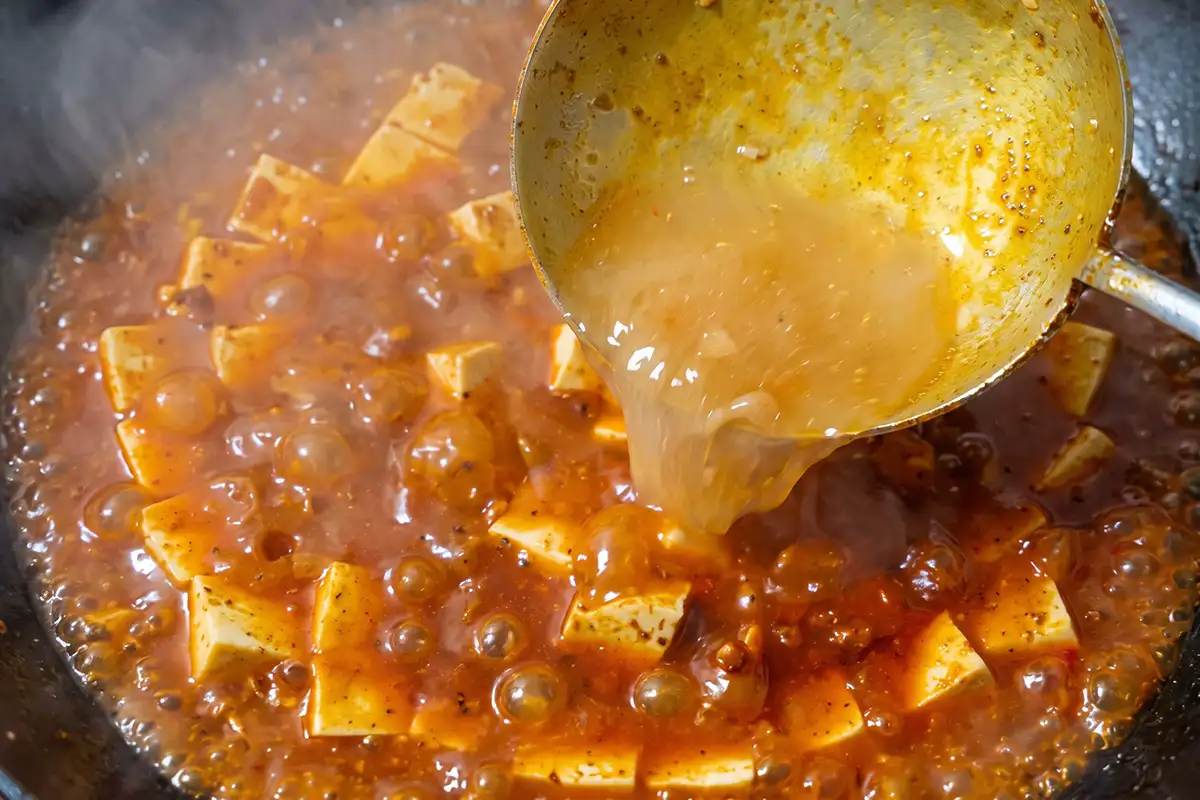
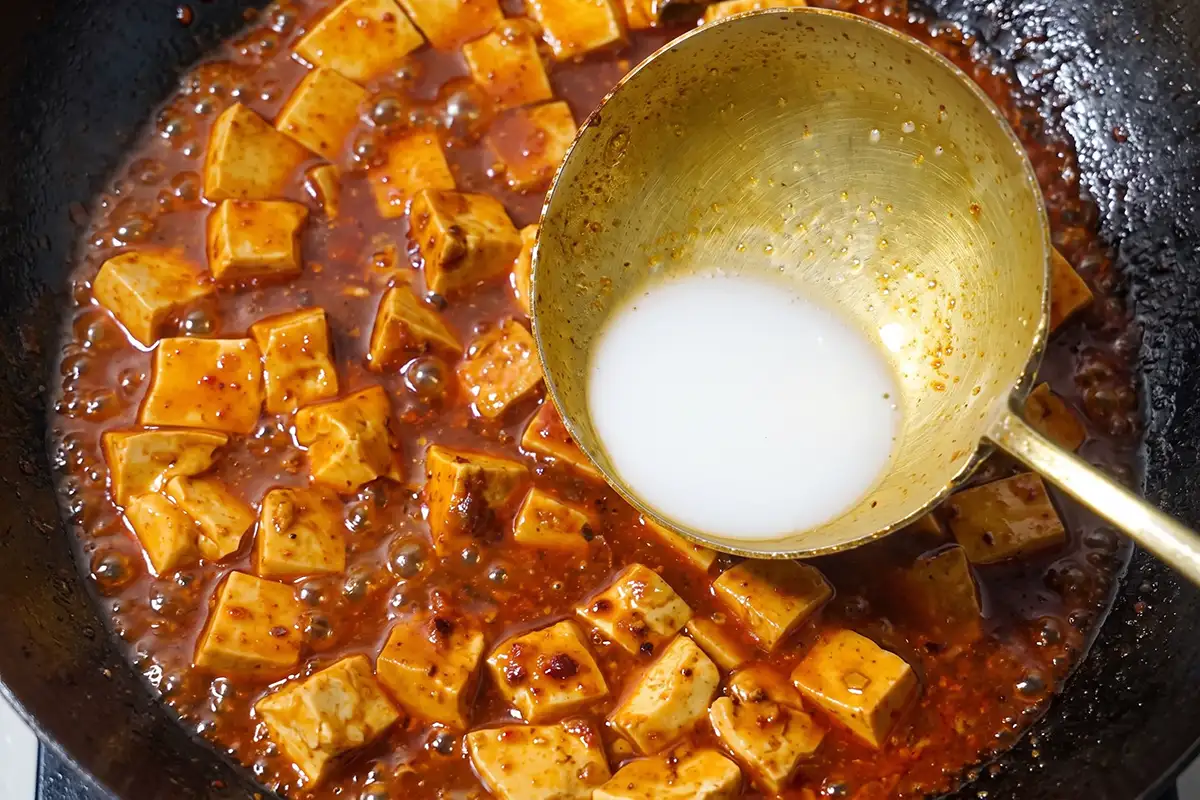
This was the third mistake I made. I used to pour the entire cornstarch slurry into the wok at once, then wonder why the sauce had an uneven texture—thick in some spots and thin in others.
First, give the slurry a stir (the starch will have settled at the bottom). Then pour half of it into the wok and stir gently. Wait 10 seconds. Add the remaining half. Stir gently again.
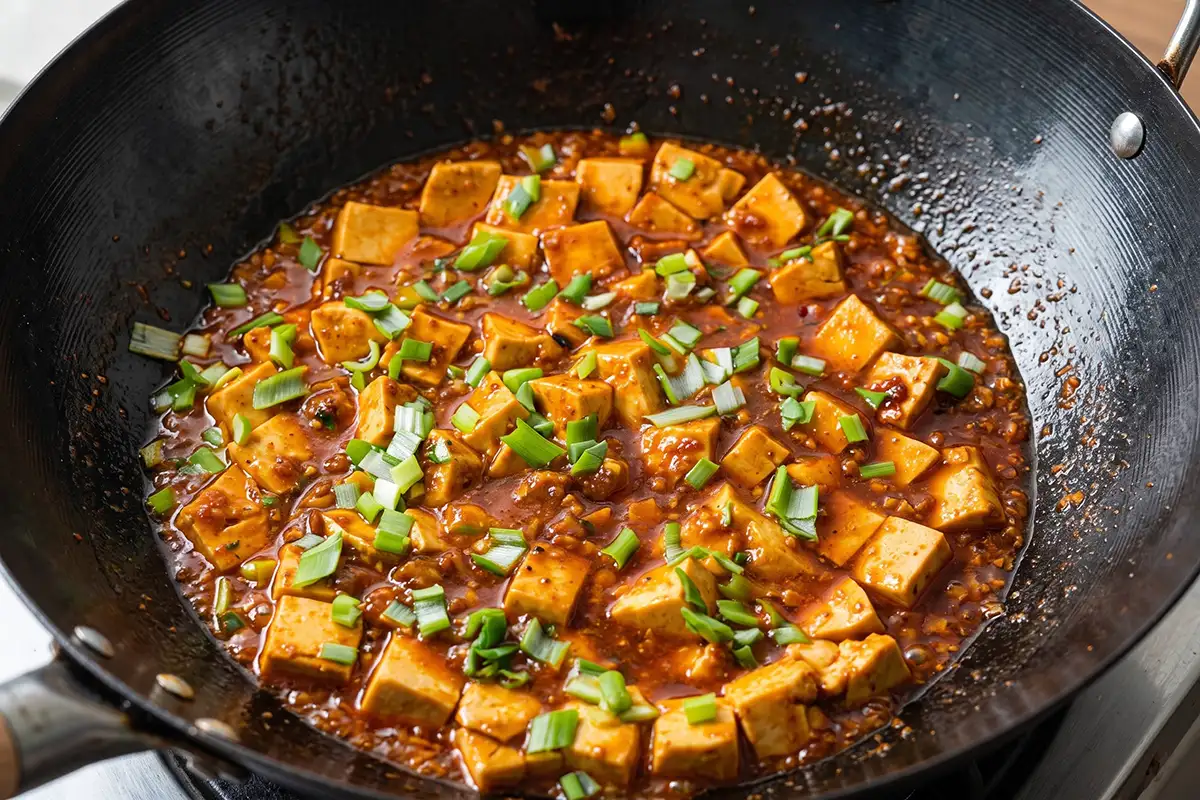
At this point, the sauce should lightly coat the tofu—each piece should be evenly coated, rather than the sauce pooling at the bottom of the bowl. If the sauce still looks too thin, you can turn up the heat for 20 to 30 seconds at the end to make the surface glossier.
Final Step
Turn off the heat. Sprinkle the remaining Sichuan pepper powder and chopped green onions over the top.
This final step of sprinkling Sichuan pepper is crucial. Simmering the Sichuan pepper in the sauce imparts a deep, mellow numbing sensation, while sprinkling fresh Sichuan pepper on top at the end adds a sharp, stimulating numbing sensation. Both are essential.
Serve immediately with steamed rice.
Mistakes I’ve Made and How to Fix Them
The tofu fell apart. This happened because I stirred too vigorously. Solution: Gently toss the ingredients; do not stir vigorously.
The doubanjiang turned bitter and developed black spots. This happened because I used too high a heat. Solution: Sauté slowly over medium heat, stirring patiently, and turn off the heat as soon as the oil turns a faint reddish color.
The sauce was as thin as water. This happened because I poured in all the starch slurry at once. Solution: Thicken the sauce in two steps, waiting 10 seconds between each addition.
About “Ma La”
If this is your first time trying Sichuan cuisine, let me quickly explain what “ma la” means.
- Spicy (La) comes from chili peppers. It creates a burning sensation on the tongue.
- Numbing (Ma) comes from Sichuan peppercorns. It creates a tingling and numbing sensation.
These two sensations are completely different. The spiciness of chili peppers stimulates heat receptors, while the numbing sensation of Sichuan peppercorns stimulates touch receptors. When combined, they create a layered flavor experience that can’t be found anywhere else.
Never skip the Sichuan peppercorns. Without them, you’re just eating spicy tofu; with them, you’re eating Mapo Tofu.
If You Need to Substitute Ingredients
| Substitute | Use | Notes |
|---|---|---|
| Silken tofu | Soft tofu (same preparation) or medium-firm tofu (requires extra gentle handling) | Medium-firm tofu: Simmer for 2 minutes, not 3–4 minutes |
| Pi County doubanjiang | Korean gochujang + 1 teaspoon fermented doubanjiang | Not authentic, but acceptable as a substitute |
| Ground beef | Ground pork (richer flavor) or ground chicken (lower fat) | Chicken must be stir-fried over high heat until browned; otherwise, it will steam through |
| Shaoxing wine | Dry sherry | Closest substitute |
| Dried chili peppers | Crushed red chili peppers (1 teaspoon) | Add along with ginger and garlic |
Vegetarian Version: Omit the beef. Add 50 grams of chopped shiitake mushrooms. Stir-fry until the mushrooms release their liquid and begin to change color. Add an extra tablespoon of oil. The texture will be different, but it’s still delicious.
Mild Version (for those who can’t handle spice): Remove the seeds from the dried chili peppers. Reduce the doubanjiang to 1 tablespoon. Reduce the total amount of Sichuan peppercorns to 1 gram.
Extra-Spicy Version: Increase the dried chili peppers to 10 grams. Add 1 teaspoon of crushed red pepper along with the spices. Increase the total amount of Sichuan peppercorns to 3 grams.
How I Serve It
Mapo Tofu must be served with rice. In my kitchen, this is non-negotiable.
I serve the Mapo Tofu in a bowl placed in the center of the table. Everyone uses a spoon to scoop it onto their own bowl of jasmine rice. The sauce soaks into the rice—that’s half the deliciousness.
Serving Suggestions:
- Steamed jasmine rice—a must
- Chilled cucumber salad—to cut the heat and refresh the palate
- Clear soup—optional but a nice touch
Not Recommended:
- Another spicy dish—one spicy dish is enough
- Greasy dishes—Mapo Tofu is already rich enough on its own
What to Do with Leftovers?
Mapo Tofu can be stored in the refrigerator for up to 2 days. The tofu will continue to absorb salt overnight, so it will taste saltier the next day.
When reheating on the stovetop, use low heat and add a little water—the sauce will thicken in the refrigerator. You can also reheat it in the microwave, but it will lose its silky texture.
Do not freeze. Freezing will completely ruin the tofu’s delicate texture.
Quick Answers
Why did my tofu crumble? Because you stirred it too vigorously. Soft tofu is very delicate; just give it a gentle stir.
Why does the sauce taste bitter? It’s because you’ve burned the doubanjiang or chili peppers. Simply stir-fry the doubanjiang over medium heat for about 1 minute; remove from heat once the oil turns a faint reddish color.
Can I use firm tofu? Yes, but the texture will be different. Firm tofu doesn’t absorb flavors as well. If you must use it, cut it into small pieces and simmer for 5 minutes.
Is Mapo Tofu very spicy? It ranges from moderately spicy to spicy. If you prefer a milder version, remove the chili seeds and reduce the doubanjiang to 1 tablespoon.
Is Sichuan peppercorn essential? Yes, it is. Without Sichuan peppercorn, it’s just spicy tofu—not Mapo Tofu.
Why is the sauce too thin? It’s because you didn’t add enough cornstarch slurry, or you added it all at once. Add it in two batches, waiting 10 seconds after each addition.
Can I make a vegetarian version? Yes. Omit the beef and substitute 50 grams of chopped shiitake mushrooms, stir-fried until golden brown.
Why should I blanch the tofu? This removes the raw, beany smell and helps the tofu hold its shape. Please do not skip this step.
Three Versions I’ve Actually Made
Mild Version (Suitable for the Whole Family): 1 tablespoon of doubanjiang, chili peppers with seeds removed, and a total of 1 gram of Sichuan peppercorns. My kids all eat this version.
Classic (Chengdu-Style): 2 tablespoons of doubanjiang, 2 grams of Sichuan peppercorns (half toasted, half raw), and 5 grams of chili peppers. This is my go-to recipe.
Extra Spicy Version: 2 tablespoons of doubanjiang, 10 grams of chili peppers, 3 grams of Sichuan peppercorns, and a drizzle of chili oil. Perfect for when you need to clear your sinuses.
Final Thoughts
Make this dish on a weeknight and serve it with a pot of rice. It’s quick enough for dinner yet “lively” enough to feel like a special meal. When you taste the perfect balance of silky tofu, crispy beef, and the rich, layered numbing and spicy flavors, you’ll understand why this dish has taken the world by storm. I’ve crumbled the tofu, burned the sauce, and ended up with a thin, bland, watery sauce. It was precisely these failures that taught me the steps I’ve just outlined.
Related Articles: