My Corn and Pork Rib Soup: From Tough Meat to Clear Broth
Ribs tough as rubber? Corn hard and crunchy with no sweetness? A thick layer of oil floating on murky broth? After ruining this winter soup three different ways, I finally learned the secrets: blanch in cold water, stir-fry the ribs before simmering, keep only a lazy bubble, and add salt at the very end.

The first time I made this soup, my jaw ached. I chewed on that piece of pork rib for a full minute before giving up. The meat was as tough as rubber.
The second time, although the meat had softened, the corn kernels were still hard and crunchy, with no sweetness at all. My child took one bite and pushed the bowl away.
The third time—all the ingredients were cooked through, but a thick layer of oil floated on the surface of the soup. It felt like I was drinking grease instead of soup.
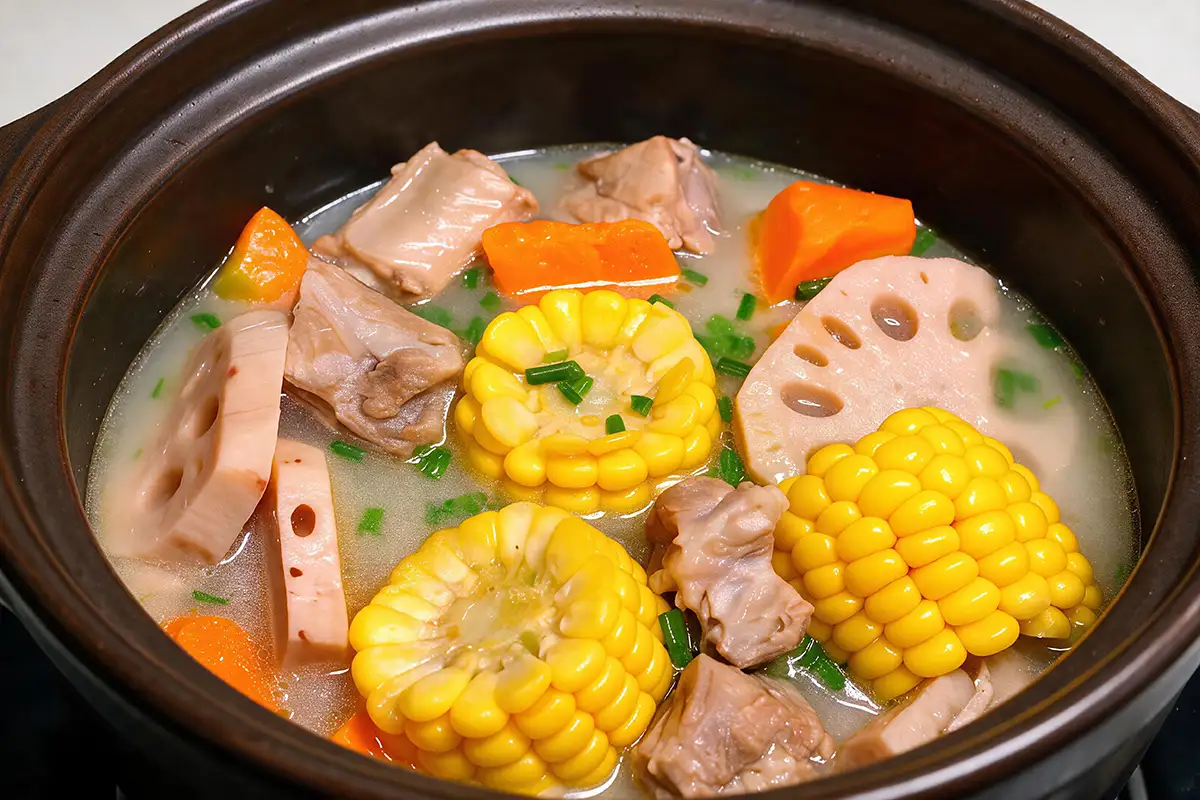
These three failures made me fully understand where I’d gone wrong. Now, during the winter, I make this soup at least once a week. The broth is clear and translucent, with a subtle sweetness from the corn, and the pork ribs fall apart effortlessly with a gentle nudge from my chopsticks. Here’s the method that finally led to my success.
Ingredients
- Pork ribs—500 grams (ask the butcher to cut them into 4-centimeter-long pieces)
- Corn—2 ears (fresh is best; frozen is fine, but add it later)
- Lotus root—200 grams (if unavailable, omit it and simply add more carrots)
- Carrot—1 medium-sized
- Ginger—a few thin slices
- Green onions—2 stalks
- Shaoxing wine—1 tablespoon (or dry sherry; can be omitted)
- Salt—to taste (add at the very end)
- Neutral cooking oil—1 tablespoon
My Cooking Method (Skipping the Cumbersome Steps)
Add the pork ribs first; do not add water initially
Take a pot. Place the pork ribs inside. Pour in cold water until the ribs are submerged. This step is crucial—if you use hot water, the surface of the meat will immediately contract, trapping all the blood and impurities inside. The result will be a pot of cloudy broth that tastes like mud.
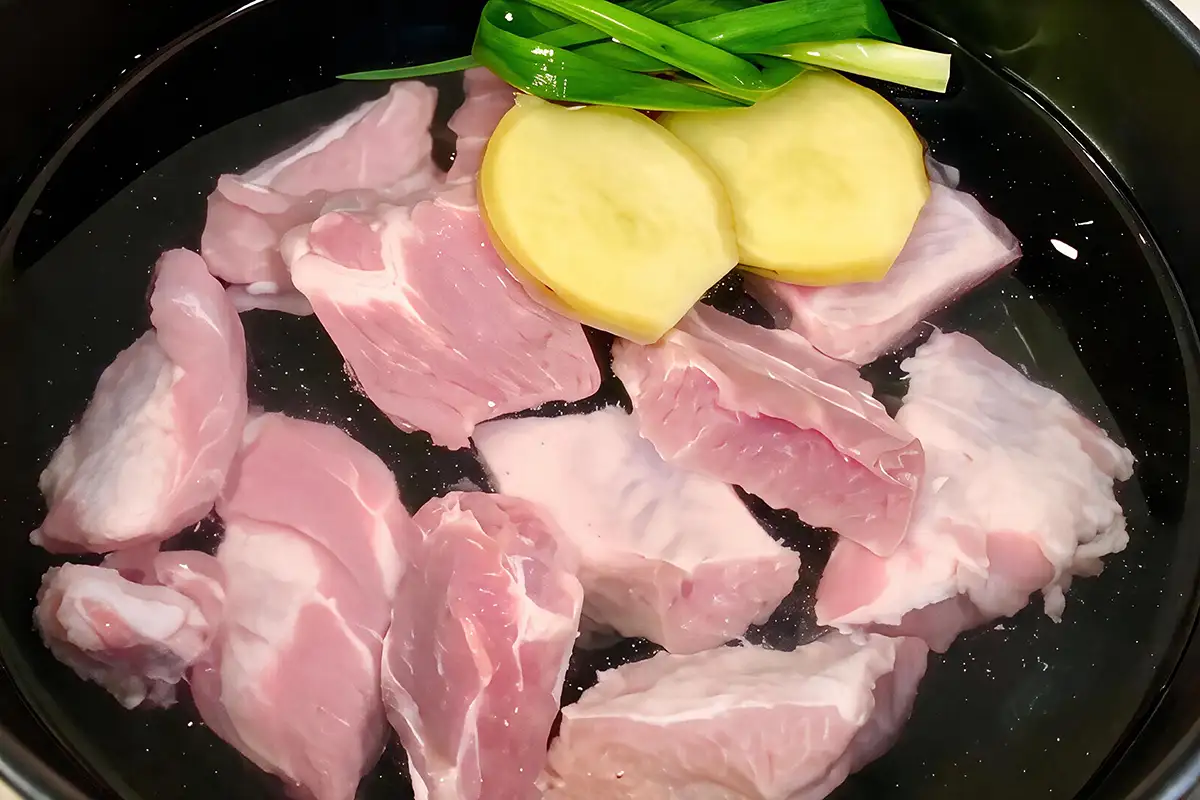
Turn the heat to high. Add the scallion segments, ginger slices, and that tablespoon of Shaoxing wine. As the water heats up, you’ll see a gray scum rise to the surface. Do not walk away under any circumstances. As soon as the scum appears, skim it off immediately with a spoon. This scum consists of coagulated proteins and fat—if left unskimmed, the broth will become cloudy and greasy.
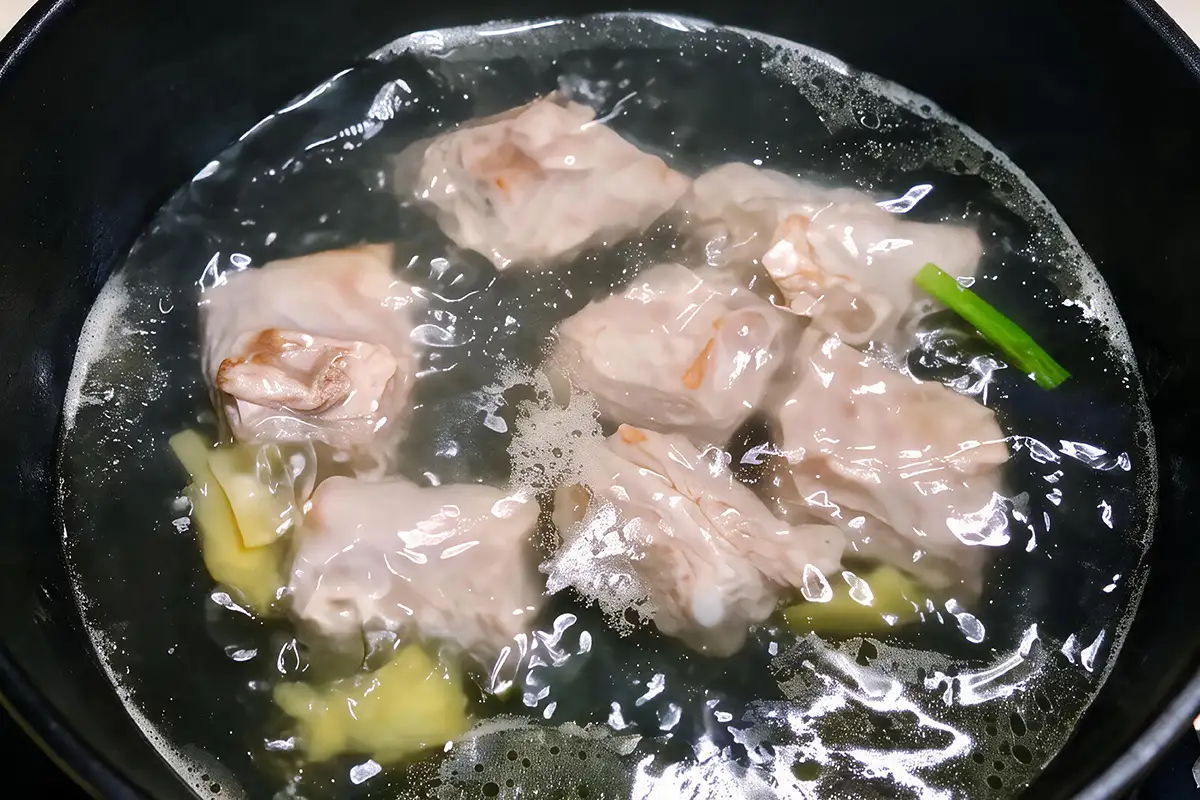
After boiling for about 2 minutes, remove the pork ribs. Rinse them with warm water—not cold water. Cold water causes the meat fibers to contract, making the meat tough again, which completely defeats the purpose of blanching. I made this mistake the first time I tried this, and the ribs ended up as tough as leather. Be sure to rinse them with warm water only.
A Quick Stir-Fry Goes a Long Way
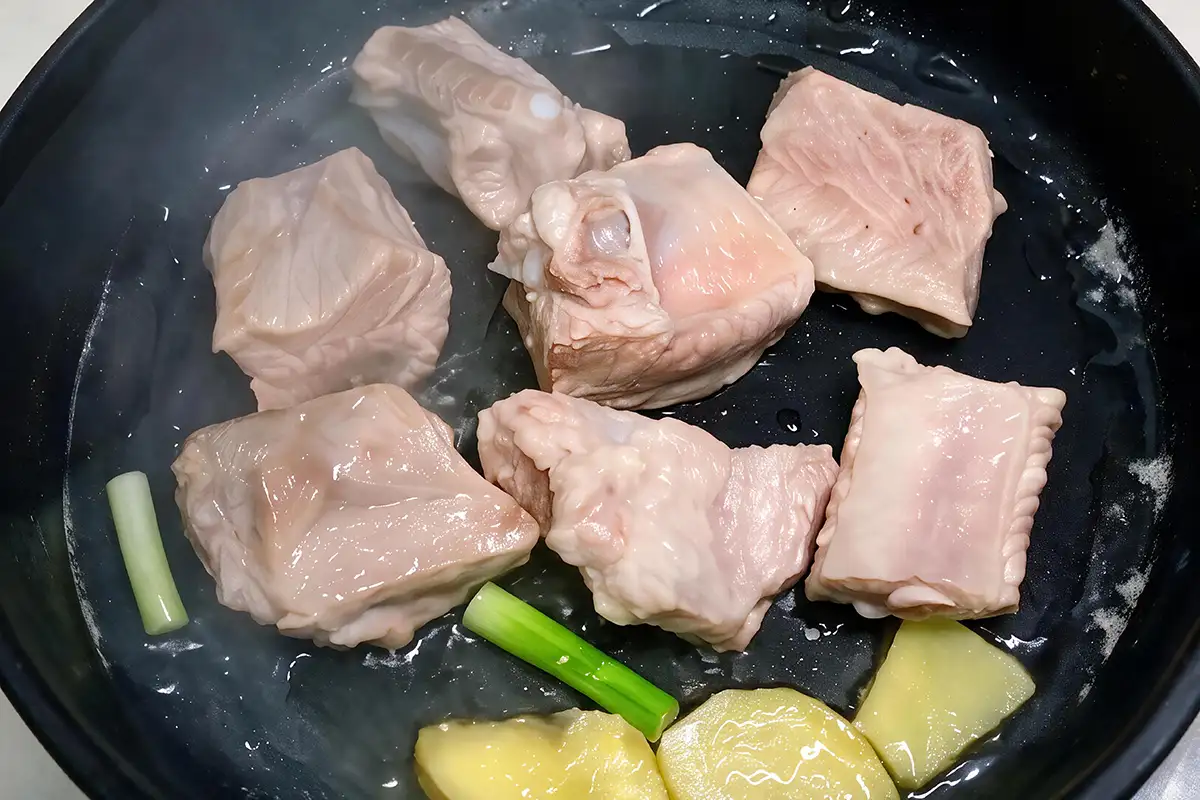
Wipe the pan dry. Heat it over medium heat and add a tablespoon of oil. Add fresh ginger slices and the white parts of the scallions, and stir-fry for about 30 seconds until fragrant. Add the pork ribs and stir-fry for 2 to 3 minutes. There’s no need to brown them—just let the edges turn light golden. This step allows some of the fat to render out of the meat, so the final soup won’t have a thick layer of oil floating on top. The third time I tried this, the soup turned out greasy precisely because I skipped this step.
Pour in Boiling Water—Not Tap Water
The trick is to add boiling water to the pot, not cold water. Add enough water to cover the pork ribs by about 2 to 3 centimeters. If you pour in cold water at this point, the temperature will drop sharply, causing the meat to shrink and toughen—resulting in a texture that’s like chewing rubber. Once the broth comes to a rolling boil, immediately reduce the heat to the lowest setting.
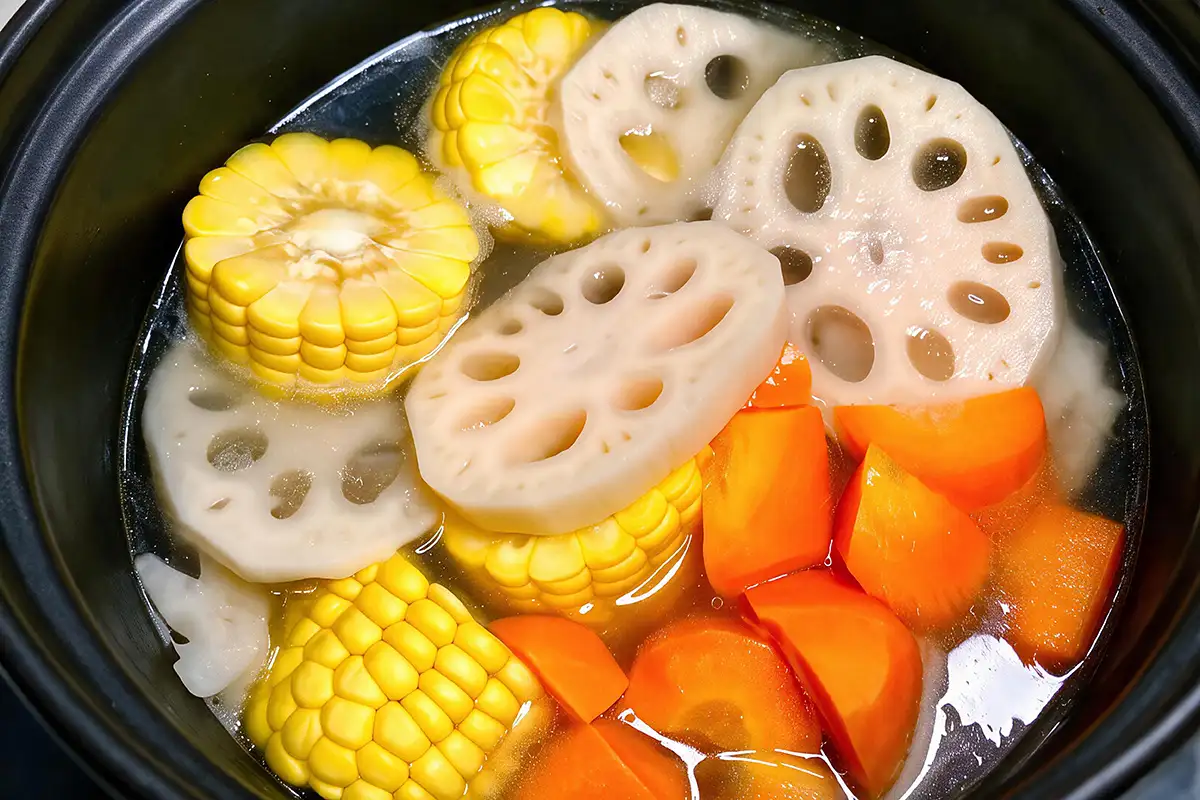
Now add the corn segments (cut each ear of corn into 5-centimeter-long segments—this size allows the sweetness to fully infuse) and lotus root slices (about 1 centimeter thick). Add the carrot chunks as well.
Maintain a Gentle Simmer
Cover the pot and simmer over low heat. The broth should just be trembling slightly—with tiny bubbles breaking the surface every 2 seconds. Avoid letting it boil vigorously. High heat causes the collagen in the ribs to release moisture rather than transform into gelatin. Only by simmering gently over low heat will the meat become tender enough to fall off the bone, and the broth remain crystal-clear.
Simmer for 30 minutes. I set the timer and walk away.
Add Salt Last
After 30 minutes, check the corn. You should be able to easily pierce the kernels with chopsticks. With a gentle tug, the meat should come off the ribs.
Now—and only now—add the salt. Stir gently and simmer for another 5 minutes. Why add it so late? Because salt draws moisture out of the meat. If you add salt too early, the ribs will release their juices and become dry and tough. Adding salt at the very end seasons the surface while keeping the inside tender and juicy.
Turn off the heat. Let the pot rest for 5 minutes before serving. During this time, the fat will rise to the surface; if you prefer a lighter broth, you can skim it off with a spoon. Sprinkle with chopped green onions and bring the entire pot to the table.
Solutions to 3 Mistakes I’ve Made
If the meat is tough: You may have skipped the warm-water rinse after blanching, or used cold water during the main simmering process. Be sure to use boiling water.
If the corn is still hard: You added it too late. Add them at the very start of the slow-cooking process, not just 10 minutes before it’s done. Simmer for at least 30 minutes.
If the soup is too greasy: This means you didn’t brown the pork ribs first, or you didn’t skim off the scum thoroughly. Sauté the ribs for 2–3 minutes until the edges turn golden brown. When blanching, skim off every last bit of scum.
Small Adjustments That Make a Big Difference
I used to cut corn into large chunks, thinking the bigger the pieces, the richer the flavor. Wrong. Cutting it into 5-centimeter-long pieces releases the sweetness faster and makes it easier to eat.
I used to add too much water because I was worried the ingredients would dry out. Wrong again. Just add enough water to cover the ingredients by 2 centimeters. Adding too much water dilutes all the flavors, making the broth taste thin and bland.
I used to seal the pot lid tightly. Now I leave it slightly ajar—just a fingertip-wide gap. This prevents the temperature from rising too quickly to a rolling boil, so the broth stays clear instead of turning milky and cloudy.
What to Use as Substitutes If You’re Missing Ingredients
- No lotus root? Substitute with potatoes or Chinese yam. The cooking time is the same.
- Want a richer flavor? When adding corn, also add 5 red dates and a small handful of goji berries. This adds a hint of amber-colored sweetness.
- Want a lighter flavor? Use pork spine instead of pork ribs. It has much less fat. Skip the step of pan-frying until golden brown entirely—just blanch the meat and then slow-simmer it.
- Not in season for fresh corn? Frozen corn kernels work too, but add them during the last 15 minutes, not at the beginning.
How I Serve It (and How to Store It)
I place the clay pot right in the center of the dining table. I serve each person a bowl of soup, accompanied by a small plate of steamed rice. The rice absorbs the broth perfectly.
Store leftovers in an airtight container in the refrigerator. They’ll keep for 3 days. In fact, the flavor becomes even richer overnight—letting the corn and meat simmer together overnight brings out the best flavors. Reheat over low heat on the stovetop—do not bring to a boil. You can also use a microwave, but reheating on the stovetop better preserves the texture of the ingredients.
Many friends, like me, enjoy using rice to soak up the sweet and light pork rib soup. It really is exceptionally flavorful, and it’s the most satisfying way to enjoy this soup.
Here’s a little tip I’d like to share, based on my research and long-term experience: Soaking rice in light corn and spare ribs soup—when eaten in normal, moderate amounts—is completely fine for your health, so there’s no need to worry excessively.
However, I’ve also noticed two minor points worth considering for home cooking:
- A small amount of fat and dissolved salt will settle at the bottom of the spare ribs soup. Soaking rice in it can lead to unknowingly consuming more sodium and trace amounts of fat, making it easier to eat something too salty compared to simply drinking the soup or eating rice on its own.
- Soaking the rice in soup softens it, reducing the need to chew. For people with sensitive stomachs or poor digestion, eating too much at once can easily lead to mild bloating.
My compromise for daily eating: I still stick to the “rice with soup” method—it goes really well with rice. But I make a point of doing two things:
- When serving myself a bowl, I try to scoop only the clear broth from the top layer, avoiding the oil that has settled at the bottom;
- I still chew the rice slowly and thoroughly, rather than swallowing it quickly in large bites.
For most people, children, and everyday family meals, this is the most comfortable and reliable way to eat—it strikes a balance between flavor and lightness.
Quick Answers to Questions You Might Have
Can I use a pressure cooker instead? Yes. Cook under high pressure for 20 minutes, then let the pressure release naturally. However, the broth will become cloudy. Simmering over low heat on the stovetop yields that clear, delicate, restaurant-quality broth. It’s worth taking the extra time.
Why did my soup turn brown? There are two reasons. Either you didn’t skim off all the scum during blanching, or you cooked it over high heat instead of simmering gently. Next time, skim the scum more carefully and turn the heat down to the lowest setting.
Can I freeze it? Yes. Portion it out and freeze it; it will keep for up to 3 months. Let it thaw overnight in the refrigerator. The corn will soften slightly, but it will still taste great.
My child doesn’t like lotus root—can I leave it out? Of course. Just add an extra carrot or another ear of corn. The soup will still taste fantastic.
This soup taught me not to rush things in the kitchen. Simmer over low heat, be patient, and correct small mistakes as they arise during cooking. I hope my experiences with chewy spare ribs, rock-hard corn, and greasy broth will help you avoid these three pitfalls. Give it a try on a cold night—it’s exactly the kind of dish that fills the whole kitchen with the warmth of home.
Related Articles You Might Be Interested In: